

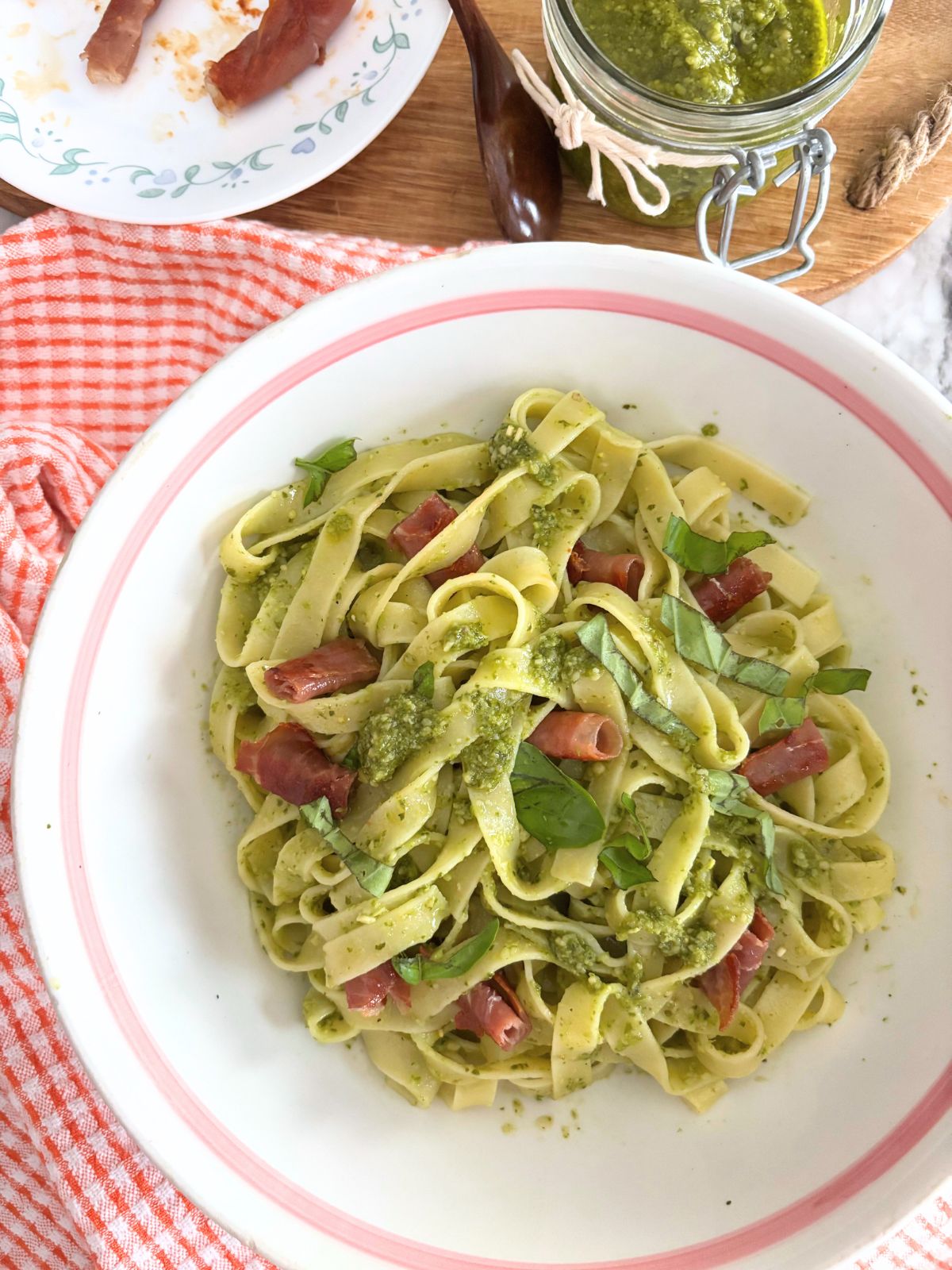
Pesto pasta is one of those go to meals that's simple to make but full of bold, fresh flavor. This easy pesto pasta recipe comes together in minutes and brings together tender noodles tossed in vibrant basil pesto.
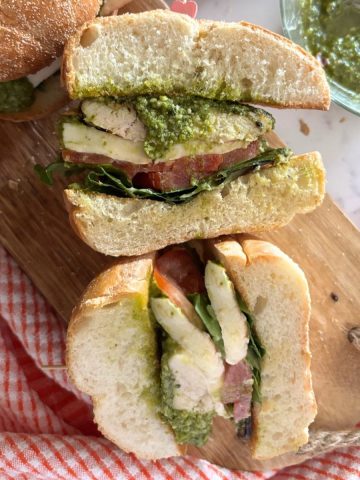
Try my Homemade Basil Pesto Sauce in Creamy Pesto Chicken, Creamy Pesto Gnocchi, Caprese Chicken Sandwich or my Tender Pesto Potatoes with Garlic and Parmesan.
Visit my recipe box for some more great recipe ideas inspired by Italian tradition!
Jump to:
Here's Why You'll Love this Dish
You'll love this pesto pasta not only because it's ready in under 30 minutes, but because:
- uses simple ingredients
- perfect for warm weather or lazy nights
- can be served hot or cold and a salad
- great way to use fresh basil from your garden
Craving that fresh, vibrant pesto flavor? You can easily make it from scratch at home! Try my classic homemade pesto sauce recipe for a bold and fragrant boost to your meals, or if you're avoiding dairy, my dairy-free vegan pesto sauce recipe is just as rich and satisfying without the cheese. Either one is perfect for pastas, pizzas, sandwiches, and more and they only take minutes to whip up.
This page contains affiliate links, which means I may receive commissions if you choose to purchase through links I provide (at no extra cost to you). Thank you for supporting the work I put into this site! As an Amazon Associate I earn from qualifying purchases.
Do you have to make Pesto Sauce for Pasta?
No. You don't have to make your own pesto sauce. You can buy it from your local super market.
But, fresh homemade basil pesto tastes so much better and what great way to use garden basil than to make your own pesto sauce to use during the summer!
If you are a fan of fresh pasta, you'll love how incredible pesto sauce tastes when paired with homemade noodles. For an extra special touch, try making pesto pasta with my Homemade Pappardelle Recipe. The wide ribbons of pasta soak up the pesto beautifully, making every bit rich, flavorful, and so satisfying!
Ingredients
This pesto past recipe comes together with prosciutto (optional), fettucine or tagliatelle pasta, salt and store bought pesto sauce or fresh homemade pesto sauce.
For exact measurement details and directions see recipe card...
How to Make Pesto Pasta
Place water in a large pot and bring to a boil.
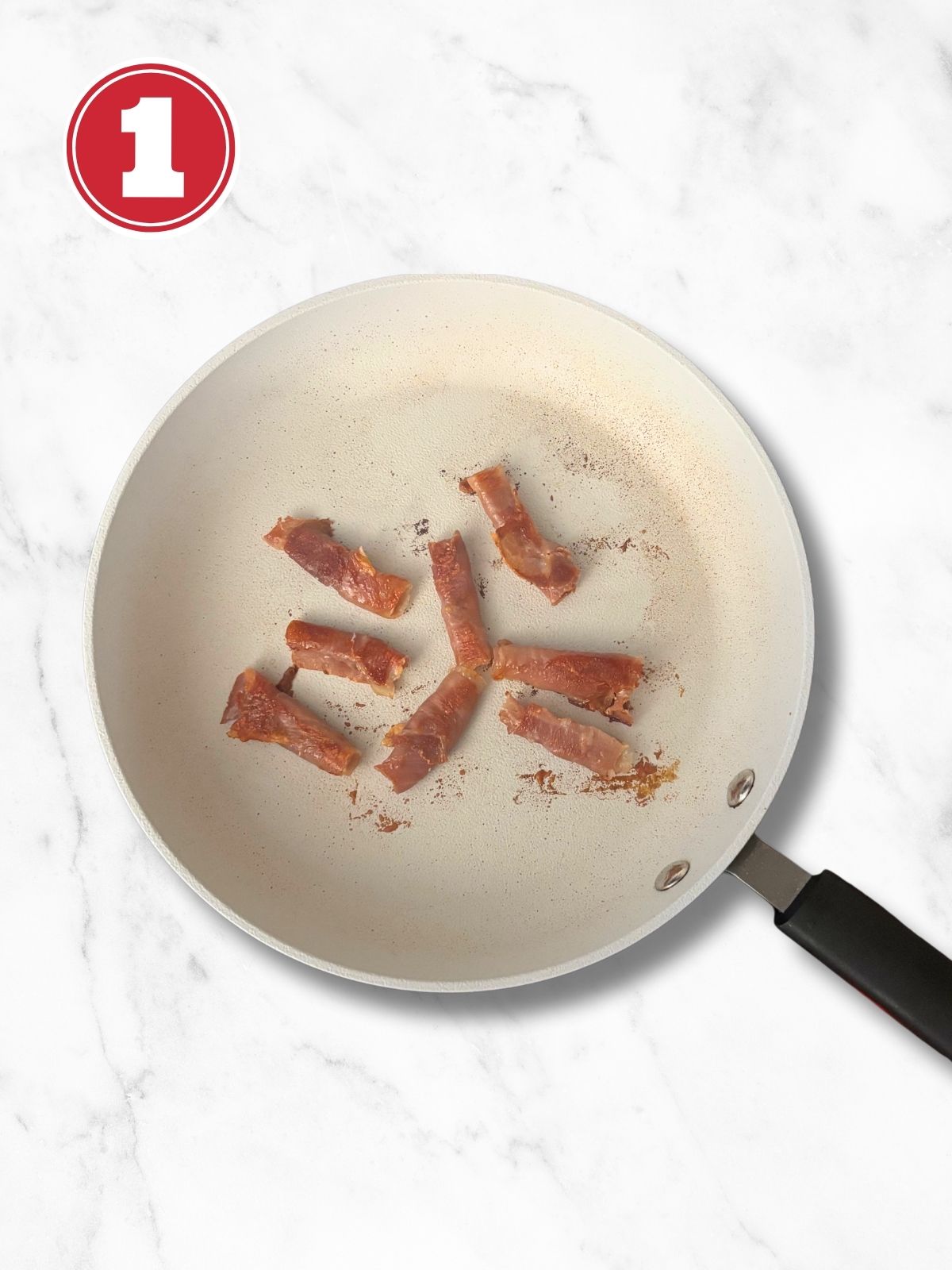
While the pot is boiling, Cut the prosciutto in half and roll each half up. Place it in a pan and crisp it on medium high heat. Flip and crisp the other side. Remove and place on a plate.
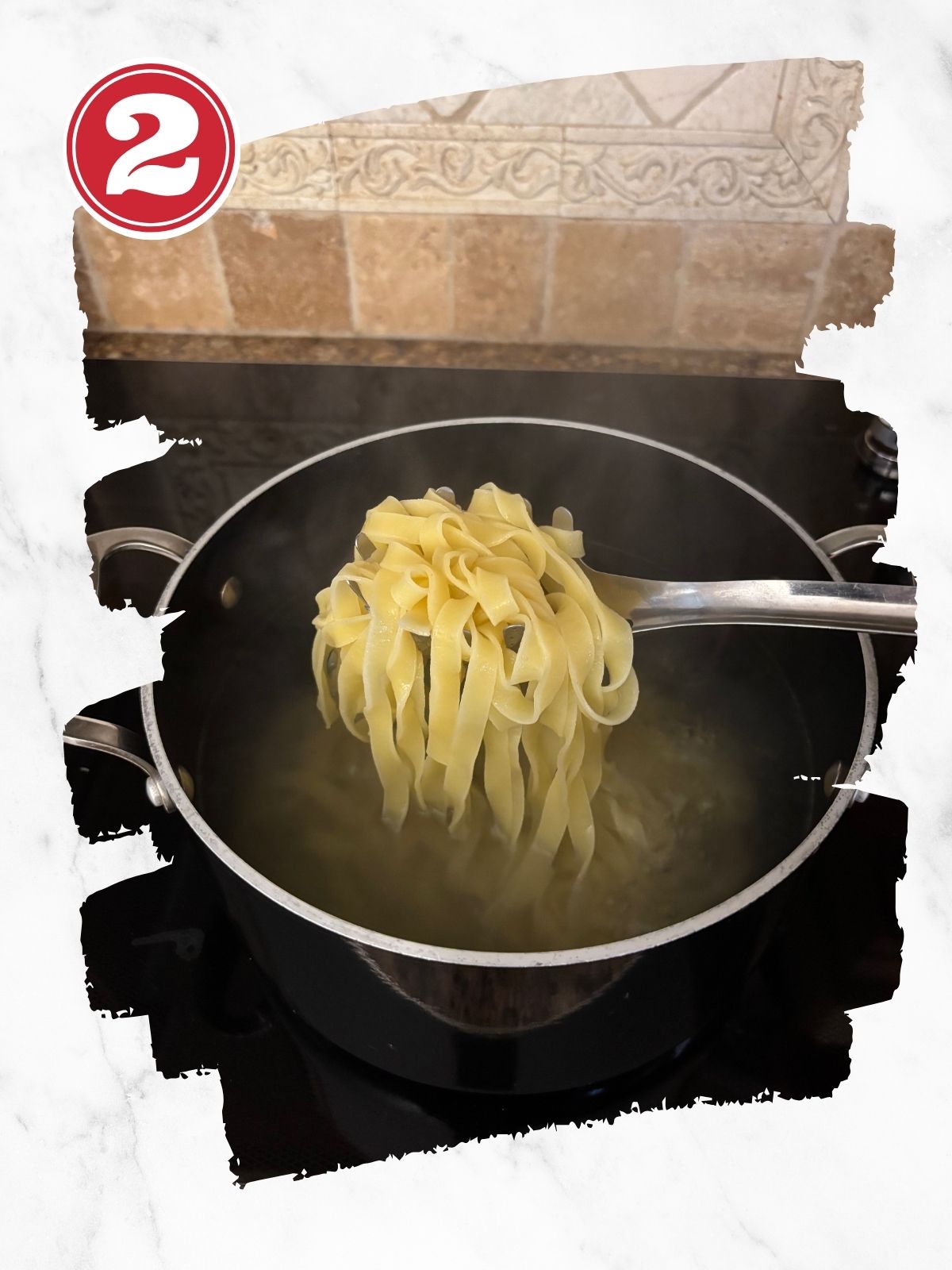
Once water comes to a boil, add salt and pasta and cook al dente.
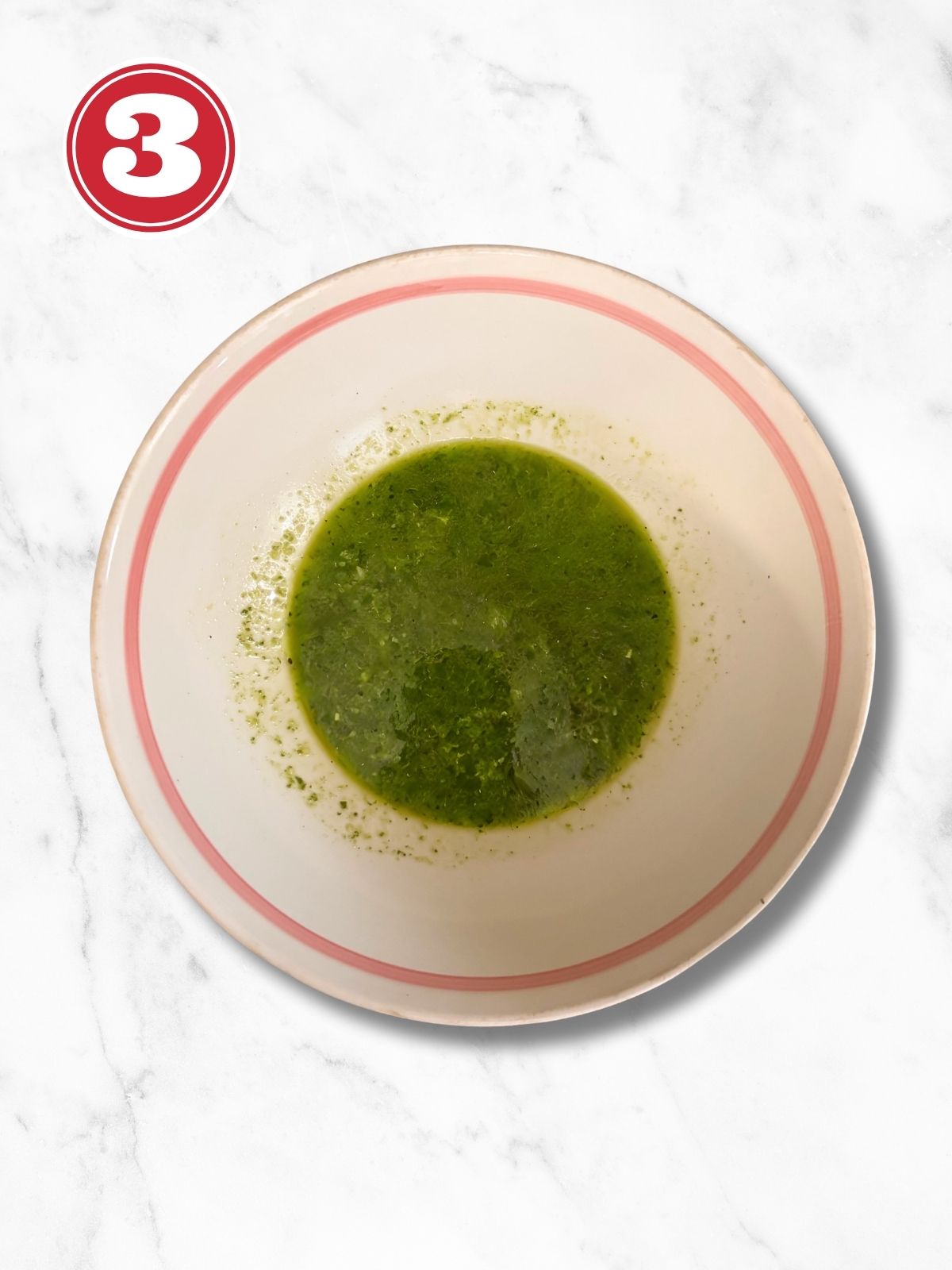
While pasta is cooking, place 1 to 2 tablespoons of pesto sauce per serving into a large serving bowl, add the pasta water and mix.
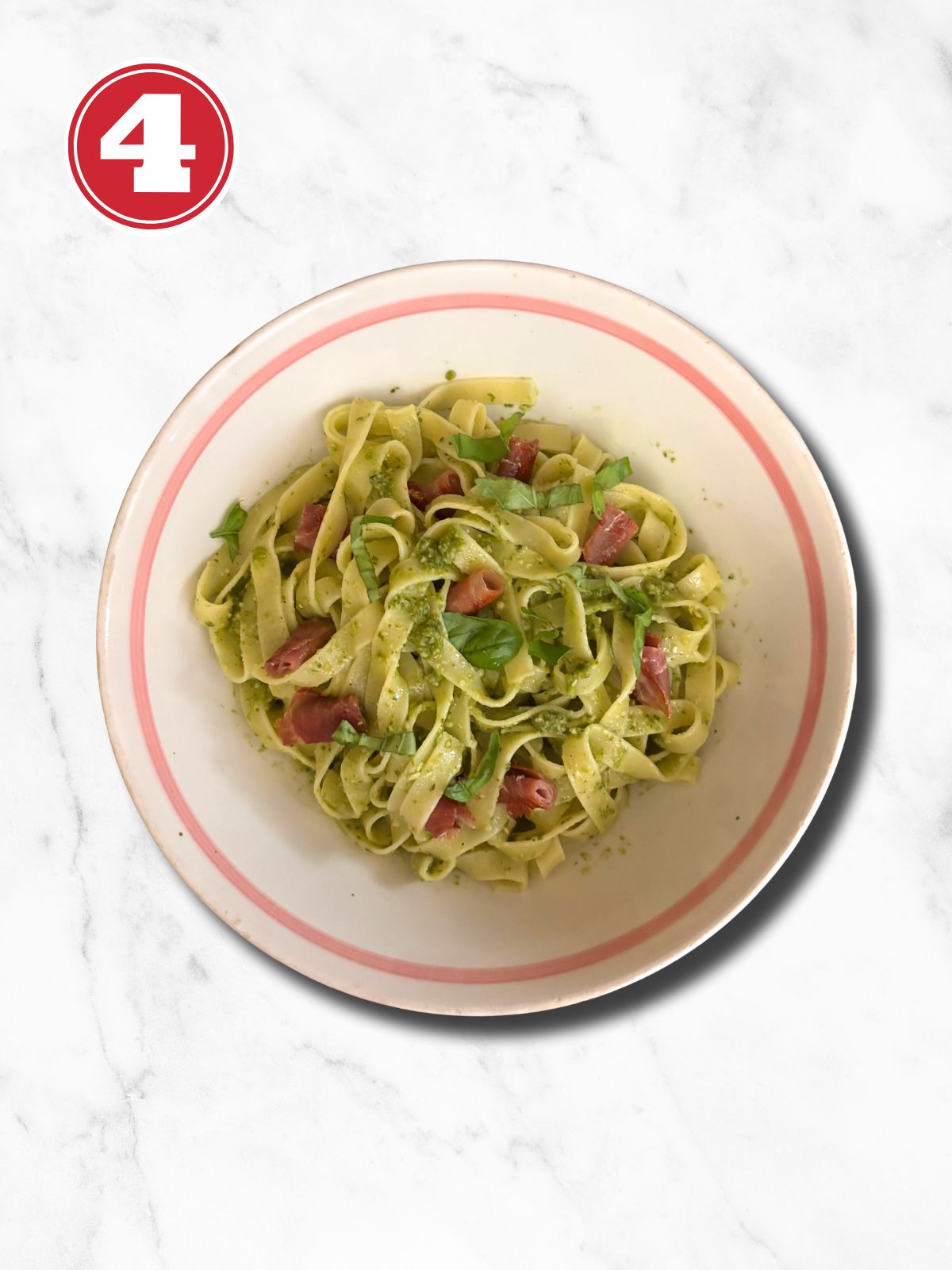
Scoop out pasta and place in serving bowl and mix the pasta and basil sauce using tongs. Top the pasta with the crispy prosciutto and serve immediately.
Storage:
Leftovers of pesto pasta store well in the refrigerator sealed in an airtight container for 3 to 4 days. Warm up in the microwave or on the stovetop.
If your pasta seems dry add a little bit of water. Top with more pesto sauce if available.
Note that the basil sauce may taste slightly different once reheated!
Freezing is not recommended.
Top Tips
Reserve ½ cup of pasta water to help the pesto coat the noodles
Toss the pasta while hot so the pesto clings better
Don't overheat the pesto to avoid dulling its flavor
Substitutions and Variations
Here are some great ways to change it up or substitute ingredients:
- Noodles - use spaghetti, penne, fusilli or a gluten free pasta
- Pesto - swap with a vegan pesto or sundried tomato pesto
- Protein - add a protein like tuna or chicken to your pasta for a full meal
- Make it Creamy - add cream or ricotta for a creamy texture
The perfect recipe isn't that far away. I'd love to know how you substituted ingredients to fit your dietary needs. Drop a comment below and let me know!
Answers to Commonly Asked Questions
Place 1 to 2 tablespoons of pesto sauce in a large serving bowl and add about ¼ cup of pasta water, mix then add your favorite cooked pasta and mix together.
Pesto pasta isn't really any healthier than traditional pasta with tomato sauce. But it can be a meatless option if you don't eat meat. When made with quality ingredients, it does offer benefits like healthy fats from the olive oil and antioxidants from the basil and garlic. Just note that it's high in calories and fat.
Add 1 to 2 tablespoons of pesto per serving. If the pesto is clumpy or two dry, add a little bit of pasta water.
More Pesto Dishes
Looking for other recipes like this? Try these:



Recipe Details
Pesto Pasta with Crispy Prosciutto
https://easyhomemaderecipes.caIngredients
- 1½ oz prosciutto 4 slices, cut in half and rolled up
- 12 oz tagliatelle pasta or your preferred pasta, or homemade pasta
- ½ tsp salt for water
- ¼ cup pasta water reserved
- 8 tbsp pesto sauce homemade or store bought
Instructions
- Place water in a large pot and bring to a boil.
- While the pot is boiling, Cut the prosciutto in half and roll each half up. Place it in a pan and crisp it on medium high heat. Flip and crisp the other side. Remove and place on a plate.1½ oz prosciutto
- Once water comes to a boil, add salt and pasta and cook al dente.12 oz tagliatelle pasta, ½ tsp salt
- While pasta is cooking, place 1 to 2 tablespoons of pesto sauce per serving into a large serving bowl, add the pasta water and mix. Scoop out pasta and place in serving bowl and mix the pasta and basil sauce using tongs.8 tbsp pesto sauce, ¼ cup pasta water
- Top the pasta with the crispy prosciutto and serve immediately.
Notes
Top Tips
Reserve ½ cup of pasta water to help the pesto coat the noodles Toss the pasta while hot so the pesto clings better Don't overheat the pesto to avoid dulling its flavorNutrition
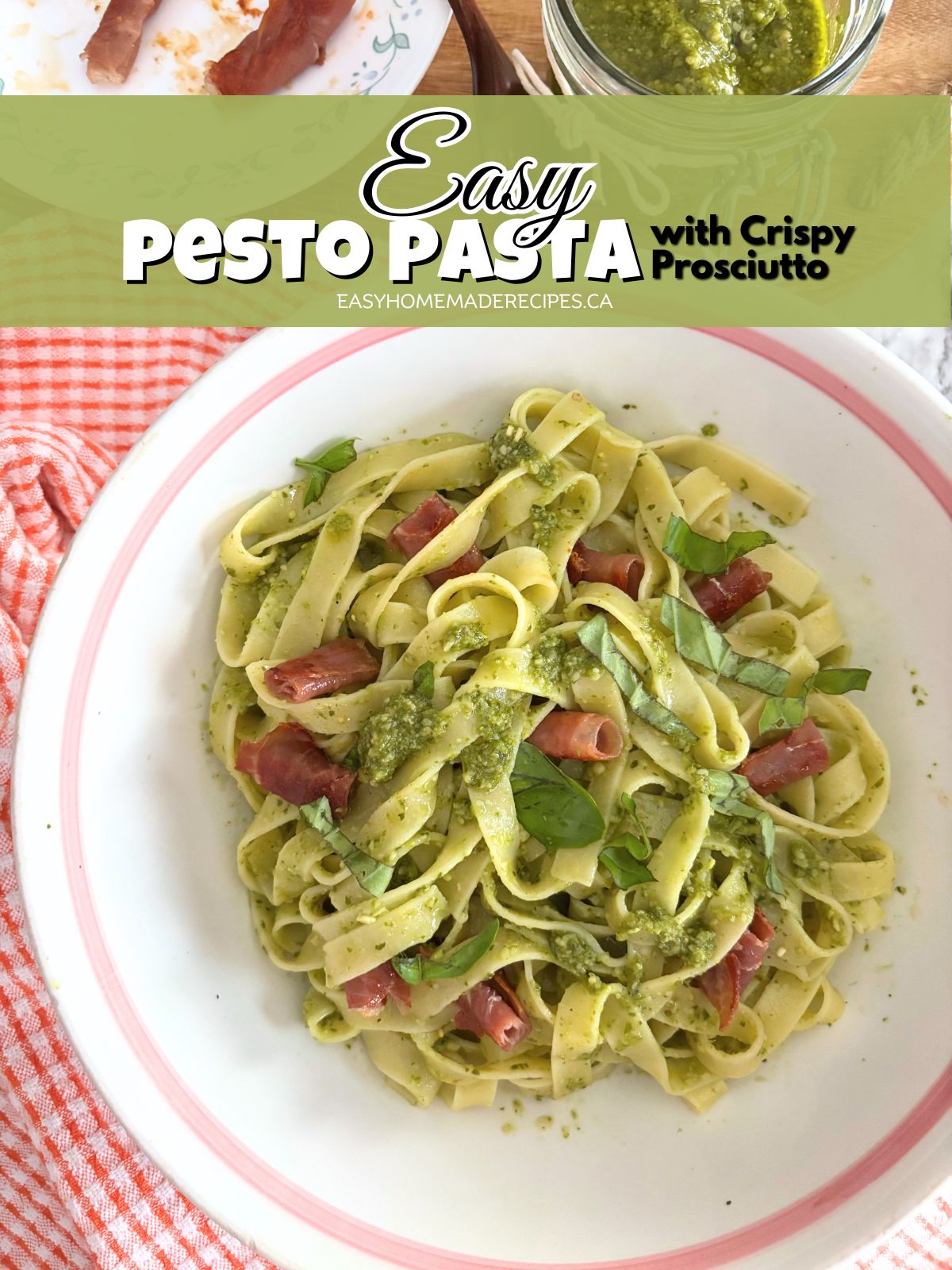
PIN it for later here
Food Safety
Note that the storage guidelines provided on this page and site are estimates from personal experiences. We are all adults and as an adult you are responsible to ensure that the food you eat is safe to eat. Since, I'm not a food safety expert, you are responsible to review your local guidelines on food storage prior to storing any food left-overs.
Remember to:
- Not use the same utensils on cooked food, that previously touched raw meat
- Wash hands after touching raw meat
- Don't leave food sitting out at room temperature for extended periods
- Never leave cooking food unattended
- Use oils with high smoking point to avoid harmful compounds
- Always have good ventilation when using a gas stove
For Canadian Guidelines check the Government of Canada Food Safety Guidelines or see more guidelines at USDA.gov.


Comments
No Comments